Environmentally Friendly Housing Solutions in the UAE: Exploring Eco-Friendly Housing Options
- Andrew Bannister

- Nov 27, 2025
- 4 min read
The world faces a critical challenge: over 35 million social homes are needed annually, yet this demand remains unmet. The Guild of New Evolution is committed to changing this reality by fostering a community of innovators, companies, institutions, and government bodies. Together, we aim to build more homes that are affordable, high-quality, and environmentally and socially responsible. This mission is especially relevant in the UAE, where rapid urban growth demands sustainable housing solutions. In this post, I will share insights into eco-friendly housing options, their costs, and practical steps to advance sustainable construction in the region.
Exploring Eco-Friendly Housing Options in the UAE
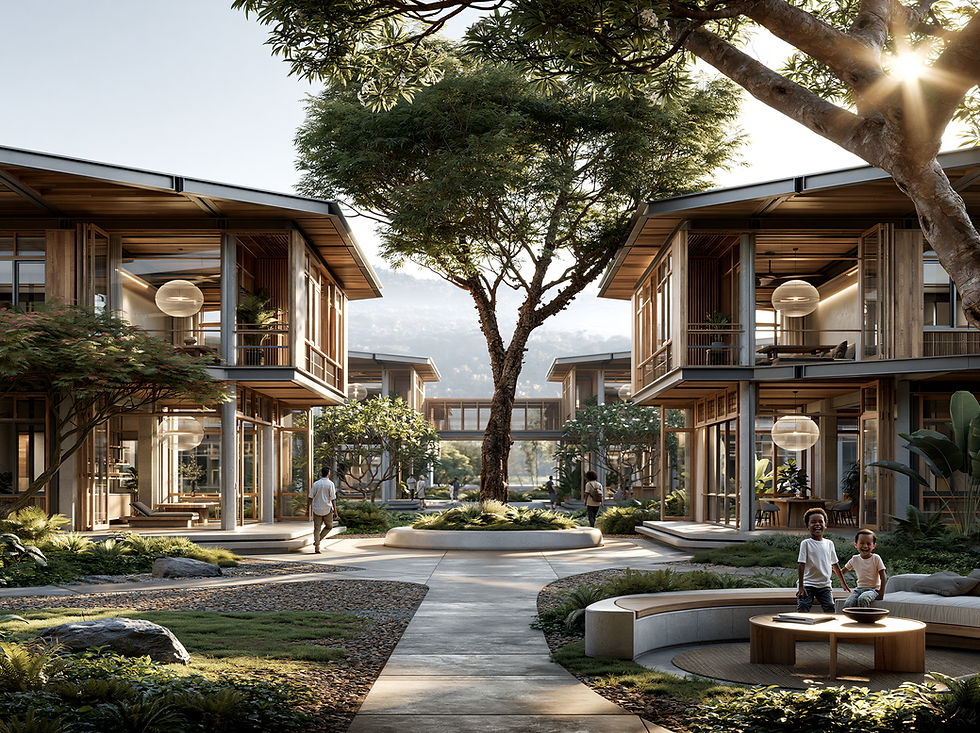
The UAE’s unique climate and rapid development create both challenges and opportunities for sustainable housing. Eco-friendly housing options here focus on reducing energy consumption, minimizing waste, and using renewable resources. Some of the most promising approaches include:
Solar-Powered Homes: Given the UAE’s abundant sunshine, integrating solar panels into housing designs is a natural fit. Solar energy can power lighting, cooling systems, and even water heating, significantly cutting electricity bills and carbon footprints.
Passive Cooling Designs: Traditional architectural elements like wind towers, shaded courtyards, and thick walls help maintain comfortable indoor temperatures without heavy reliance on air conditioning.
Sustainable Building Materials: Using locally sourced, recycled, or low-impact materials such as compressed earth blocks, recycled concrete, and bamboo reduces environmental harm and supports circular economies.
Green Roofs and Walls: Incorporating vegetation on roofs and walls improves insulation, reduces heat absorption, and enhances air quality.
Water Conservation Systems: Rainwater harvesting and greywater recycling are essential in arid regions like the UAE to reduce water consumption.
These options not only reduce environmental impact but also improve residents’ quality of life by creating healthier, more comfortable living spaces.

How much do eco houses cost?
One of the most common questions about eco-friendly housing is the cost. While initial investments can be higher than traditional homes, the long-term savings and benefits often outweigh these upfront expenses. Here’s a breakdown of key cost factors:
Materials: Sustainable materials may cost 10-20% more than conventional ones, but prices are decreasing as demand grows.
Energy Systems: Installing solar panels or energy-efficient HVAC systems can add 15-25% to construction costs but reduce utility bills by up to 50%.
Design and Planning: Hiring architects and engineers specialized in green building may increase design fees by 5-10%, but their expertise ensures optimal performance and compliance with regulations.
Maintenance: Eco homes often require less maintenance due to durable materials and efficient systems, saving money over time.
Incentives: The UAE government offers various incentives, such as rebates and reduced fees, to encourage sustainable construction, which can offset initial costs.
For social housing projects, economies of scale and innovative construction methods like modular building can further reduce expenses. The Guild of New Evolution advocates for these approaches to make eco-friendly housing accessible and affordable.

Practical Steps to Implement Environmentally Friendly Housing
Building more homes sustainably requires coordinated action across sectors. Here are practical recommendations to accelerate the adoption of environmentally friendly housing in the UAE and beyond:
Form Collaborative Networks: Join communities like The Guild of New Evolution to share knowledge, resources, and best practices.
Invest in Research and Innovation: Support R&D in new materials, construction techniques, and energy systems tailored to local conditions.
Promote Policy Support: Advocate for regulations and incentives that encourage green building standards and penalize wasteful practices.
Educate Stakeholders: Train builders, designers, and policymakers on sustainable methods and their benefits.
Pilot Demonstration Projects: Showcase successful eco-friendly housing models to build confidence and attract investment.
Leverage Technology: Use digital tools like Building Information Modeling (BIM) and smart home systems to optimize design and operation.
Engage Communities: Involve residents in planning and maintaining their homes to ensure social sustainability.
By taking these steps, we can collectively overcome barriers and scale up the delivery of affordable, high-quality, and sustainable homes.
The Role of Investors and Policymakers in Driving Change
Investors and policymakers hold the keys to unlocking the potential of eco-friendly housing. Their roles include:
Investors: By funding green construction projects and sustainable technologies, investors can generate financial returns while supporting social and environmental goals. Impact investing and green bonds are effective tools to channel capital into this sector.
Policymakers: Governments can create enabling environments through clear regulations, building codes, and incentives. For example, mandating energy efficiency standards or offering tax breaks for sustainable developments encourages adoption.
Public-Private Partnerships: Collaborations between government agencies and private companies can pool resources and expertise to deliver large-scale social housing projects efficiently.
Monitoring and Reporting: Establishing transparent metrics to track environmental and social impacts ensures accountability and continuous improvement.
Together, these stakeholders can transform the housing landscape in the UAE, making eco-friendly homes the norm rather than the exception.
Building a Sustainable Future Together
The challenge of providing over 35 million social homes annually is immense but not insurmountable. By embracing innovative, cost-effective, and environmentally responsible construction methods, we can create homes that serve people and the planet. The Guild of New Evolution invites you to join this movement. Together, we can learn, share, and implement solutions that make a real difference.
Let’s build a future where every home is a step toward sustainability, affordability, and social equity. Your participation matters - contribute to the discussion, adopt new methods, and help shape the next generation of housing.
For more information and to become part of this transformative community, visit The Guild of New Evolution.


Comments