The DIGNITY Line

Every housing system on earth has one. No regulator publishes it. Everyone who has lived below it knows exactly where it is.

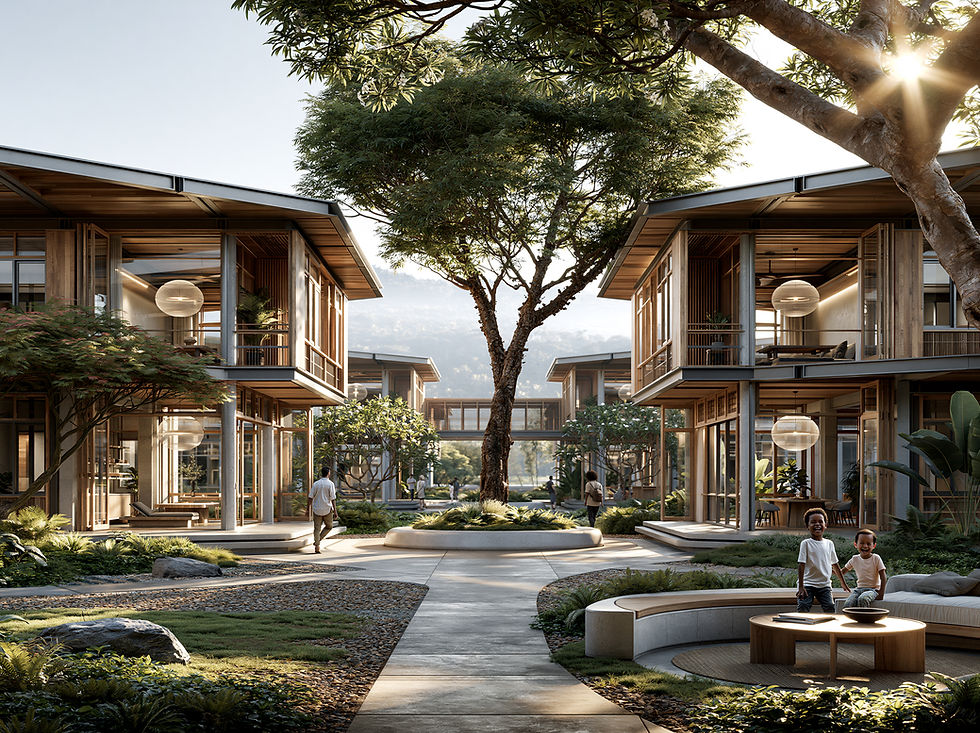
Above the line, a home keeps out the weather, keeps the family safe, gives a child a place to study, and stays put from one year to the next.
Below it, none of that can be relied upon — and everything else in life gets harder as a result.
What sits on the line is not complicated: → Shelter that holds, for decades not seasons → Safety, and a door that locks → Water, sanitation, power → Enough space — not generous, enough → Security of tenure → A place in a street, a village, a neighbourhood
None of that is new. What ought to be new is treating it as a single non-negotiable floor rather than a wish list traded away when the budget tightens.
UN-Habitat's World Cities Report 2026 puts 3.4 billion people — more than one in three of us — in some form of inadequate housing. Keeping pace with need means 96,000 completed homes a day. We build them the way we did in 1926.
I've written a longer piece on how the line looks in the UK, the Philippines, Kenya and Brazil — and why I believe it will only be reached at scale when housing is made rather than merely built.
The full argument is in my book, Built to Belong — a free download from the About page at guildmmc.com.
Andrew J Bannister | Founder, GUILD of MMC


Comments